When’s the Right Time to Build Your First Professional Website?
Have you ever wondered whether it’s too early or too late to hire a web development team and launch a full website? Or maybe you’ve been using a simple landing page for months, and now you’re debating if it’s worth upgrading to something more… professional?

If so, you’re in the right place.
In the early days of any project, whether it’s a startup, a small business, or a creative side hustle, your focus is on getting things done: talking to users, running demos, gathering feedback, and iterating fast. Your product changes weekly, and so does your messaging. That’s why early pages tend to be simple, lightweight, and easy to edit.
But at a certain point, something shifts, traction grows, your message stabilizes, and you start attracting real interest. That’s when you need more than a quick fix.
Let’s unpack how to know when it’s time to move beyond DIY pages and invest in a professional website.
Why Not Build a Pro Website on Day One?
Starting with a completed website is an achievement, but in reality, at the start, you probably don't have a clear product vision or a well-defined audience. Spending money and time on a polished site before these things settle can lead to wasted effort.
In the early stages, your landing pages (quick one-page sites designed around a single offer or message) work just fine as long as they’re easy to adjust quickly.
A simple landing page design helps you test messaging and learn what resonates with visitors before you lock anything in permanently.
But how do you know it's time to switch?
Look for the signs below.
1. You Know the Core Problem You Solve
Initial tests show that many entrepreneurs put up every feature they've ever built and expect users to figure it out. But this often confuses visitors.
A professional website becomes worth it when you can clearly define:
- What core problem do you solve
- Who experiences that problem?
- Why your solution is better than alternatives
When your product evolves past “we’re figuring this out” to “this is what people value,” that’s a strong signal. Your homepage should focus on this core narrative, not on unfinished features.
Great sites don’t just show what you’ve built. They communicate why it matters. And that only comes when your vision is stable.
2. You Know Who’s Actually Buying (and Why)
Getting tired of editing that homepage headline before your upcoming sales calls? This is common until you reach a point where you're no longer guessing what your prospect needs through trial and error.
However, a professionally developed site will be worth it once you're past 'trial and error' and can produce incremental, repeated user profiles, sales-sounding language, and understand what makes them convert.
Building a site that speaks to specific target audiences makes sense once you understand that it's not every benefit that will appeal to every website visitor.
3. You Have Real Signals: Feedback, Usage, Proof
At this stage, you’ve likely collected:
- User testimonials
- Case studies or reviews
- Metrics showing real interest
- Clear use cases that matter to people
These signals are powerful trust builders. A professional website doesn’t just invite people to “try it.” It gives them solid reasons why they should backed by proof.
Without these signals, a nice website can feel like lipstick on a pig. With them, it becomes a trust magnet.
Stats That Show Why Good Design Matters
Fast, simple, well-designed websites convert better. Design is a growth tool, not just decoration.
- 47% of users expect pages to load in under 2 seconds. Slow sites lose visitors quickly.
- Landing pages convert around 6–7% on average, higher than most standard pages.
- Top landing pages reach 11%+ conversion rates with strong design and messaging.
- 86% of high-performing pages are mobile-friendly, proving that mobile experience is essential.
More Than Just a Website: It’s a System
Many founders confuse a pro website with a pretty homepage. But a pro site is actually a scalable design system. It provides:
- Clear positioning and focused messaging
- Navigation that guides users where to go
- Graphics and layouts that explain how your product works
- A foundation for all future marketing and launches
It’s not about aesthetics alone. It’s about structure, flow, and conversion optimization.
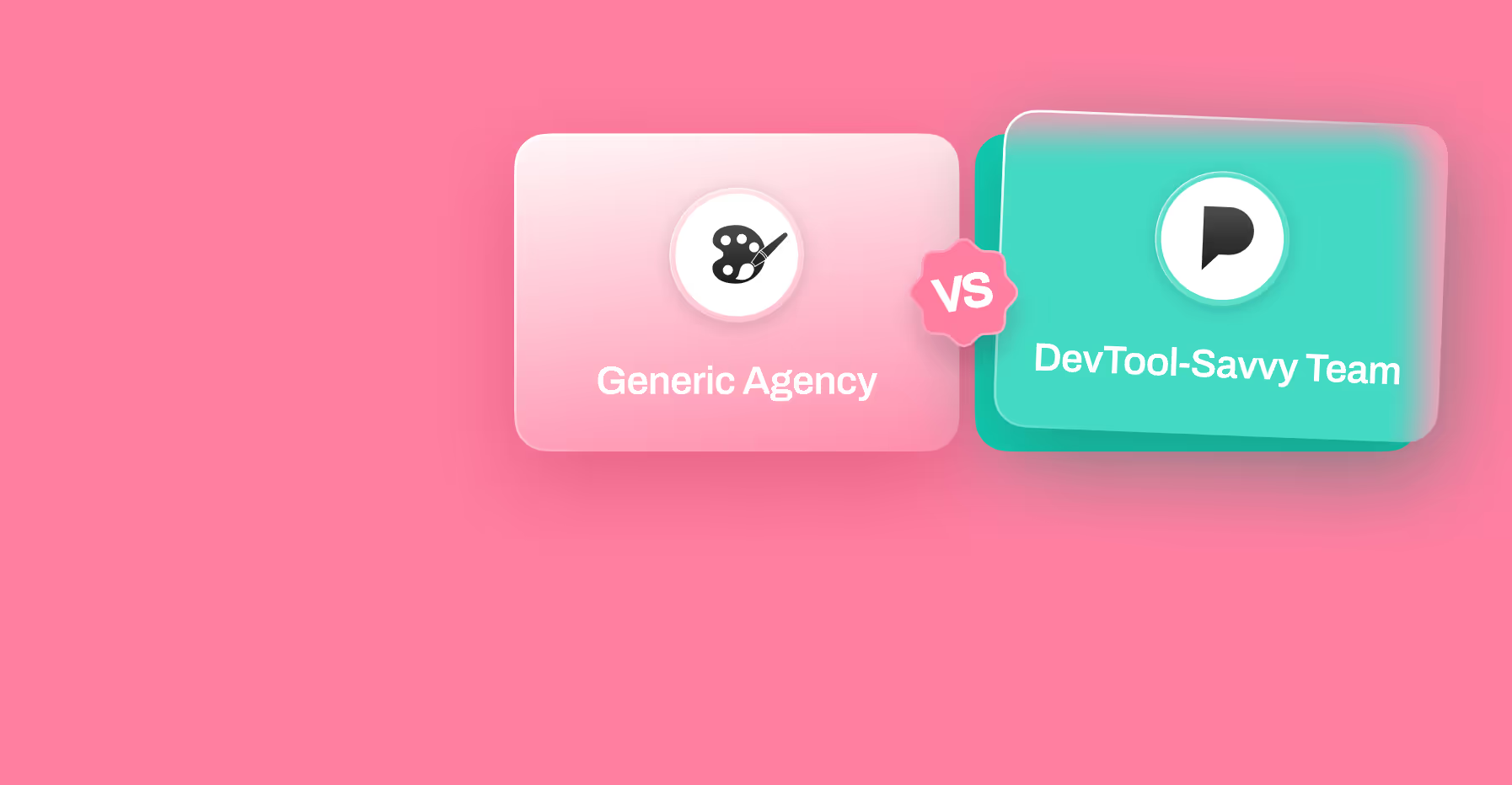
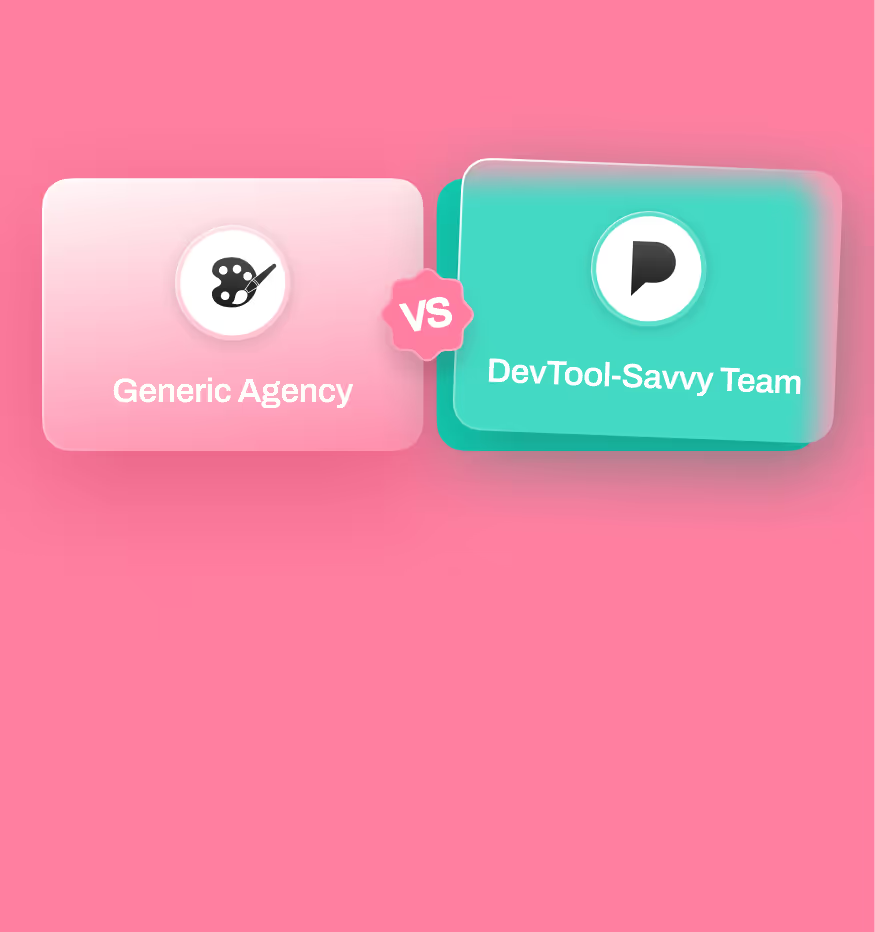
Simple Landing Page vs. Professional Website
Both landing pages and professional websites serve different purposes, and each has its place depending on the stage of your project.
A simple landing page is usually very quick to launch. It focuses on a single message or offer and is easy to edit whenever your product or messaging changes. Because it’s simple, the design is usually basic, and the information is limited. Landing pages can work well for early experiments or short marketing campaigns, but their SEO potential and long-term credibility are usually lower.
A professional website, on the other hand, takes more time to build because it includes multiple pages, a stronger design, and a clear structure. It provides more detailed information about your product, services, and brand. With better navigation, stronger design, and optimized content, a professional site improves trust with visitors and offers much better opportunities for long-term SEO growth. Over time, this can lead to stronger conversions and better overall brand credibility.
In short, landing pages are great for getting started quickly, while professional websites are better suited for businesses that are ready to scale, build trust, and grow their online presence.
When You Should Wait (and What to Do Instead)
You might want to hold off on a full site if:
- Your product vision is still changing weekly
- You’re pivoting your core message often
- Your audience isn’t clearly defined yet
- You’re not sure what drives conversions
In this phase, focus on nimble landing page design and rapid feedback loops. Keep your messages short, simple, and data-informed.
Conclusion: When It’s Time to Take Your Website Seriously
So, when’s the right time to build your first professional website?
Not on day one, but when your product is clear, your audience is defined, and real traction begins.
As your business gains popularity, a single page might not be enough. An effective website not only enhances your credibility but also effectively communicates your offerings and converts visitors into customers. It plays a crucial role in your expansion.
If you’re ready to move beyond quick setups and create something built to convert, teams like Peppermint.id can help shape a polished web presence that supports long-term success.
The right time isn’t about rushing; it’s about being ready to grow.
FAQ: Your Most Common Questions Answered
1. Can I start with just a landing page?
Yes, in fact, most startups do. Landing pages are quick, inexpensive, and perfect for testing messaging and offers in real conditions.
2. What about SEO? Do landing pages help?
Landing pages can help with short-term campaigns, but full professional sites with many pages and optimized content perform much better for search rankings over time.
3. How much does a pro website cost?
Costs vary widely depending on complexity, from a few hundred dollars for basic sites to thousands for fully custom professional builds.
4. Should I build it myself or hire a team?
If you’re aiming for long-term growth and a polished presence, hiring experienced designers/developers is usually worth the investment. A pro team helps translate strategy into results.